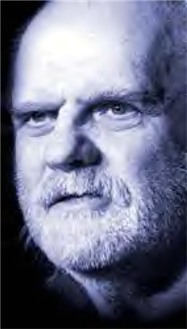
Chairman Fred Newman.
The International Workers Party (IWP) is a secretive Marxist political organization founded by controversial psychotherapist Fred Newman.
The IWP has its roots in Centers for Change, a radical community organizing project led by Newman in New York City in the early 1970s. Newman steered the CFC into a brief alliance (1973-74) and even briefer merger (three months in 1974) with Lyndon LaRouche's National Caucus of Labor Committees (NCLC); the association began shortly after the conclusion of LaRouche's infamous "Operation Mop Up," a series of violent NCLC attacks on leftist groups. Even before bringing CFC members into the NCLC, Newman had written articles supporting LaRouche's theories and techniques, especially the use of psychoanalytic concepts in political organizing and recruitment efforts.
The ostensible reason for the "Newmanites" leaving the NCLC was a disagreement between LaRouche and Newman over what to do with the National Unemployed and Welfare Rights Organization (NUWRO), which the LaRouchians had founded the previous year (Newman wanted to build it up, while LaRouche wanted to concentrate on more rarified issues). However, the differences in lifestyle between LaRouchians and Newmanites were equally important in triggering the split, with the notably puritanical LaRouche declaring that there was no room in the NCLC for the CFC's unconventional sexual practices. Newman and 38 of his followers issued an open letter (August 1974) in which they announced they were leaving the NCLC and forming the IWP. The latter, they proclaimed, would be the true vanguard party that would lead (within months) a revolution of the working class against Rockefeller fascism.
In 1975, the IWP was joined by four Trotskyists who had previously constituted themselves as the Class Unity Faction within the Workers World Party but had been forced out as a result of their opposition to the WWP leadership's supposed reformism. The members of Class Unity hoped to convert the former CFC members to their own brand of revolutionary communism but soon found that their polemical style, which emphasized ideological principles, could not compete with Newman's more emotional, psychotherapy-based control over his longtime followers. The Trotskyists and a handful of disillusioned former CFCers then split away in 1976 to form the short-lived "Communist Cadre" organization. In a dramatic public confrontation at a forum on New York's Upper West Side and in a series of mimeographed broadsides, they accused Newman of running a psychotherapy cult and of encouraging his followers to provide the FBI with false information on a dissident member of the former CFC, Jim Retherford, who had denounced Newman's alliance with LaRouche. Newman was forced to admit that the approach to the FBI had been made but claimed that his followers had done it without his knowledge or consent. The ComCads retorted that no one in the Newman collective did anything without checking with Fred first.
Later that year, Newman announced the IWP was being abolished so that he and his associates could concentrate on community organizing. But a Manhattan newspaper, Heights and Valley News, published quotes in 1977 from IWP internal bulletins indicating that the party still existed as an underground formation. Since then, a steady stream of evidence--including many more internal documents, statements from former members, statements from psychotherapy clients who were the targets of unsuccessful recruitment as late as 2002, and sworn court deposition testimony--has indicated that the IWP continues as the core organization of various electoral fronts, psychotherapy clinics, youth programs, and cultural entities that openly follow Newman's philosopy.
The IWP considers itself a revolutionary organization that fuses Leninist vanguardism with Newman's own theory and practice of "social therapy." Newman believes that everyday psychological ills are brought about by the same bourgeois social order that supposedly is the cause of poverty and wars. In Power and Authority (1974) he argues that each person in capitalist society has a "dictatorship of the bourgeois ego" in his or her head. The task of the social therapist (who is also the client's political organizer) is to lead the client in overthrowing this bourgeois ego through intrapsychic revolution and to replace it with a "dictatorship of the proletarian ego," which is exerted throught the revolutionary collective. Critics have suggested that Newman's proletarian ego dictatorship is really the cult-rule of Newman's own ego, while some former members have described in articles and web postings how the "collective" (both in therapy and in political work) serves to browbeat, guilt-trip and intimidate individual members. Among the former members, however, are some who say they benefited from the experience and are only mildly critical of Newman and other party leaders.
In the 1980s, the IWP (referred to euphemistically as the "Tendency") was composed of "cells" that carried out party directives. Each cell had a leader, who would report to higher level leaders. At the top was the "Secretariat," headed by Newman and including his communist "wives." Various types of revolutionary play-acting (including secret couriers and messages to be destroyed immediately after being read), and various devices for squeezing more money and longer hours of work out of the cadre, were characteristic of life in the IWP.
Newman and his followers created an array of public organizations of which the most important was the New Alliance Party (NAP), an electoral front, which from its 1979 inception was "pro-socialist" but also had a broader issue-oriented appeal. Although the IWP continued to keep its own continued existence a secret, NAP served as its means to attract individuals interested in multiculturalism and community empowerment. Meanwhile, the IWP carefully controlled NAP (and its finances) behind the scenes while selectively and very discreetly recruiting new clandestine cadre from it.
It was the IWP cadre who steered NAP members into social therapy (and also, conversely, steered social therapy patients into NAP). Eventually the "secret" of the IWP's existence would be revealed to those deemed susceptible to (and worthy of) joining the vanguard. Meanwhile the IWP recruiters answered for all aspects of their work to Newman and his inner ring.
Over the years, the IWP has emulated the "democratic centralist" parties of international communism in that it has a "Central Committee," a governing body that supposedly includes the most dedicated and loyal members. In theory, the IWP's democratic centralism allows for debate over strategy and tactics, although once the Central Committee arrives at a policy decision all party members are required to follow through with it.
Some former members say that the IWP Central Committee is just a tool for Newman to control the social status of the cadre, and that its members have little capacity to oppose his personal will. For instance, most party leaders passively acquiesced when Newman decided in the early 1990s to stop the party's vigorous organizing in the black community, disband NAP and abolish National Alliance (NAP's newspaper) in order to concentrate on fundraising projects and efforts to influence middle-class and upper-class constituencies.
In the late 1990s, Newmanite cadre captured control of the New York Independence Party, an electoral third party that has its roots in the Ross Perot movement. In 2001, the Independence Party provided the swing vote that elected tycoon Michael Bloomberg as mayor of New York. The result was an $8.5 million tax-free municipal loan to a Newmanite cultural center and youth program, and various other forms of patronage from City Hall as well as private funding from the mayor's own pocket. However, when the media suggested that the Newmanites had abandoned their previously revolutionary politics, Newman responded by giving a public speech in 2003 entitled, defiantly, "Why I am still a Marxist."
Since 2002, the web site www.ex-iwp.org has provided a forum for former IWP members, both those hostile to the group and those who remember it with mixed feelings (and even a few who are still friendly with its leaders), to comment openly on their experiences and on current Newmanite political, cultural and fundraising endeavors. A "send us your stuff" appeal by webmaster Marina Ortiz (a freelance writer and former IWP member) elicited previously secret internal party documents which she duly posted on her site. Among these documents was a transcript (read it here) of a 1983 meeting of the IWP's "Office of Economic Development" in which Newman discussed how to "launder" the party's money. He boasted that "there's big money in Marxist-Leninist organizing if we set up the structure," and referred to the IWP's social therapy clinics as a "bloody goldmine."
The New York Post in a 2002 investigative article cited secret documents of recent provenance that suggest the Newmanites are still carrying out a disciplined revolutionary strategy; however, it appears now to be a Gramscian one based on a long-range goal of capturing hegemony over cultural, educational and other superstructural positions in American society, rather than focussing on street agitation or confrontational organizing. (The hegemony theory of revolution was developed by Antonio Gramsci, the founder of the Italian Communist Party.)
In a book published in 2000, Newman's disciple and chief public spokesperson Lenora Fulani described herself as a "postmodern Bolshevik," which would be as good a description as any for this curious sect that secretly espouses revolution but openly functions as a political support network for New York City's billionaire Republican mayor.
--------------------------
NOTE: The above article is based on a heavy rewrite and expansion by Dennis King of Wikipedia's IWP article. King's rewrite was the current version on Wikipedia as of March 8, 2005. The version on Lyndon LaRouche Watch as of 2010 includes significant changes to King's 2005 version as well as photographs not included on Wikipedia.
